
Home Health Monitoring
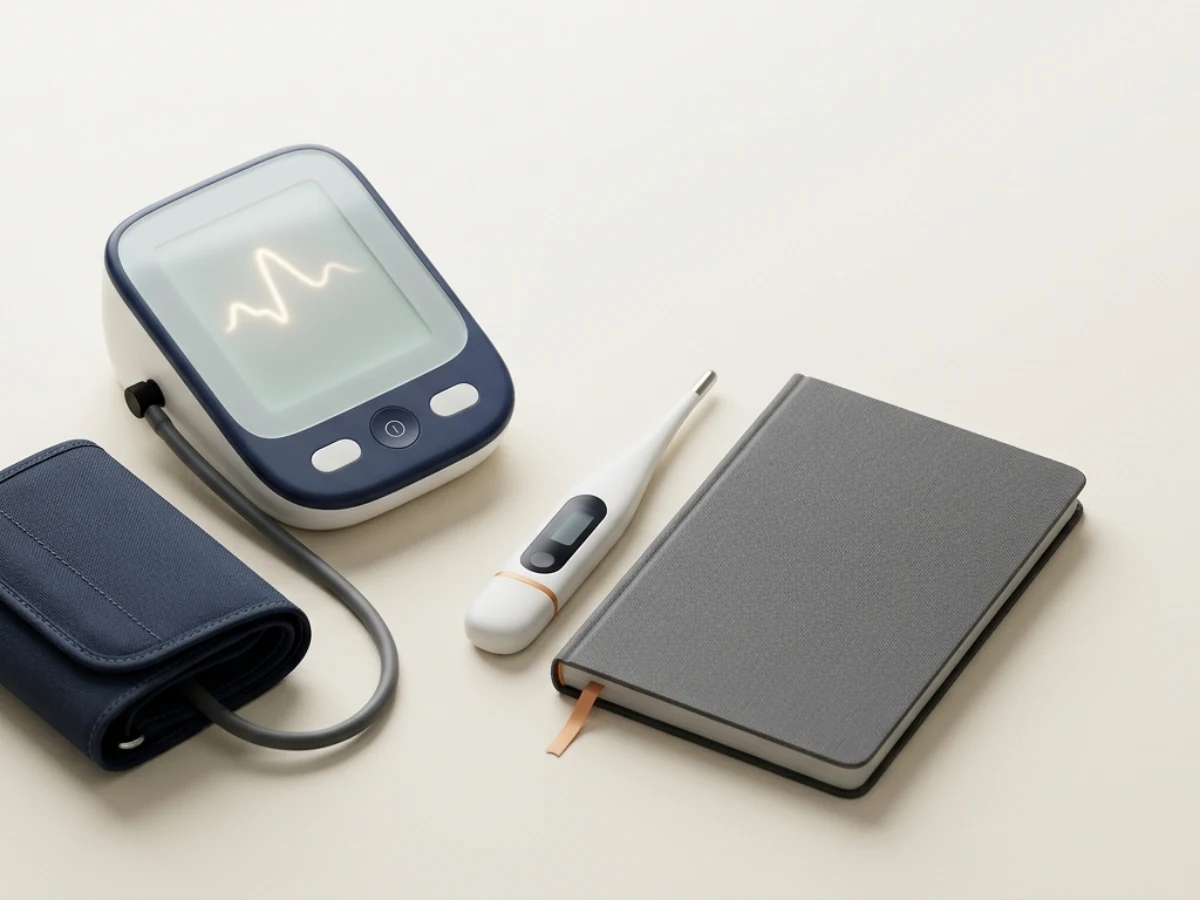
Automated blood pressure monitors and household thermometers are among the most frequently used devices in multi-generational Indian homes—yet wrong cuff sizing, unvalidated equipment, or rushed seating posture can skew readings significantly. Here we explain how to read clinical evidence honestly and measure responsibly at home.
Clinical Validation vs. Manufacturer Specifications
Many retail boxes advertise terms such as "clinical grade" or print laboratory sensor tolerances (for example, ±3 mmHg static cuff pressure on a blood pressure monitor or basic thermistor tolerance on a thermometer). A factory sensor specification alone is not proof that a blood pressure algorithm or clinical thermometer was independently tested across human subjects under recognised validation standards.
Equally important for Kerala and Indian households: a cuff that is too narrow for an adult's upper arm—or a thermometer used at the wrong anatomical site or immediately after a hot/cold drink—can skew readings, while storing electronic monitors, cuffs, or digital thermometers in damp cupboards during heavy monsoon months can degrade tubing and battery contacts.
Home Health Monitoring Guides
Read our educational guides on blood pressure monitors, fingertip pulse oximeters, and digital thermometers prepared by SwasthiyaSure Health Essentials Editorial (review status: Editorially Reviewed).
How to Choose the Right BP Monitor for Your Family
Evaluating cuff circumference ranges for multiple family members, checking recognised clinical validation registries, display legibility for senior parents, power options, and total ownership cost.
Read Guide →Upper-arm vs Wrist BP Monitor: Which Should You Choose?
Why brachial upper-arm monitors remain the standard clinical preference for home tracking, how hydrostatic wrist position affects radial readings, and specific cases to discuss with your physician.
Read Guide →How to Measure Blood Pressure Correctly at Home
A practical step-by-step routine covering pre-measurement rest, seated back and arm support, bare-skin cuff positioning, morning and evening timing, and maintaining an accurate log for clinic visits.
Read Guide →How to Choose a Pulse Oximeter for Home Use
Understanding SpO2 accuracy ranges, perfusion index, cold finger effects, regulatory CE marks vs clinical validation, and provisional product profiles.
Read Guide →How to Choose a Digital Thermometer: Contact, Forehead, or Ear?
Comparing contact digital stick, non-contact infrared forehead, and tympanic ear thermometers: anatomical measurement routes, NICE vs. AAP paediatric recommendations, fever red flags, and eight provisional product profiles.
Read Guide →Explore Other Health Essentials Categories
Clean Air & Home Health
Mechanical HEPA filtration, room sizing, ozone-free safety, and coastal humidity considerations.
Open Hub → Wellness vs. ClinicalSmart Health Technology
Understanding optical wearables and keeping everyday wellness trends distinct from clinical diagnostics.
Open Hub → Device Hygiene & SafetyRespiratory Care
Doctor-prescribed nebulisation basics, interface compatibility, and manufacturer-specific care rules.
Open Hub →Disclosures & Medical Disclaimer
Affiliate & Editorial Independence Disclosure
Pre-Approval Affiliate Status: No retail or affiliate links are active in this initial educational release.
SwasthiyaSure Health Essentials is planned to operate on a transparent affiliate model once independent product verification and retailer affiliate programme approvals are completed. Potential commission rates never determine editorial coverage, Stage A safety eligibility, or evaluation criteria.
Medical Disclaimer
This page is for general educational purposes only and does not replace professional medical advice, diagnosis, or treatment. SwasthiyaSure is not a healthcare provider, testing laboratory, or clinical certification body.